Digital execution systems architect
Bringing order
to digital
chaos.
Architecture.·Sequence.·Governance. Clearer decisions. Digital execution systems that last.
The real problem
Digital chaos doesn't come
from a lack of technology.
In many organizations, digital projects pile up. Decisions overlap. Teams keep moving, but without a clear framework.
The problem is structural: what's missing is architecture, sequence, and governance. That's where I come in, before the tool and before execution.
Fragmented projects
Parallel initiatives with no sequencing logic create decision debt and wear teams down.
Missing governance
Without a clear decision structure, every step forward creates new ambiguity instead of clarity.
Speed without order
Speeding up without a foundation doesn't create impact. It amplifies the chaos. Speed comes after structure.

About
Field experience.
Rigorous structure.
I'm not a theorist. I've been through the real pressures of entrepreneurship: a young father, an MBA underway, a business shutdown, a complete rebuild.
When decisions are unclear, projects derail. The field is where I learned to quickly spot what's holding progress back, and how to fix it with structure, not with more tools. My role: a digital execution systems architect who turns ambiguity into operational clarity.
The method
FlowShift.
A system for structuring digital projects. Moving from complex or disorganized environments to clear, governable, lasting execution.
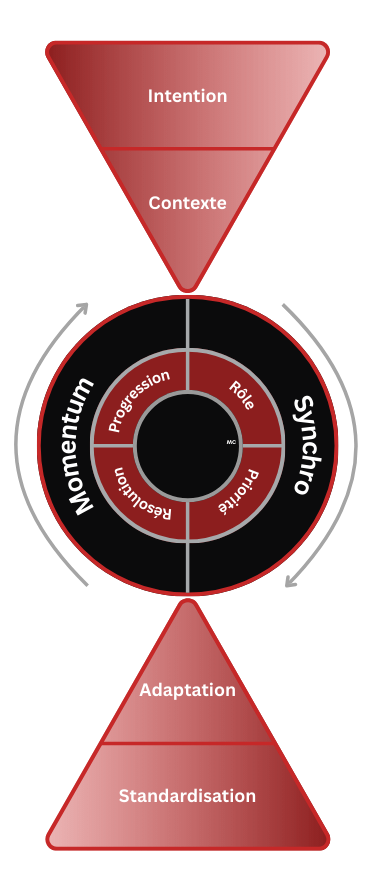
FlowShift OS
The operational engine
of the system.
Getting things moving starts with clarifying what's really wanted, and in what specific context.
The operational core: four levers, always active, with Momentum and Synchro as the driving forces.
What works gets adapted first, then standardized, so it becomes autonomous and lasting.
Architecture
Map what exists. Identify the decisions left hanging. Set a framework before adding a single tool or resource.
Sequence
Set the logical order of priorities. Speed without sequence amplifies chaos. Sequence turns intention into execution.
Governance
Put in place the decision mechanisms that let teams move forward on their own, consistently and sustainably.
"Structure before execution. Governance before tools."
Explore the methodWhat I believe
Before I implement,
I clarify.
Before I execute, I structure. Organizations that move fast on shaky foundations pile up debt, not value.
Before I add tools, I bring order. Even the most powerful tool becomes a problem on a disorganized foundation.
AI amplifies. It doesn't replace judgment. Used at the right time, on a well-structured base, it becomes leverage, not a dependency.
First step
Got a digital project
that won't budge? Let's talk.
No pitch, no ready-made solution. A 30-minute conversation to understand your real situation and see if I can help.
Tell me about your challenge →- Understand what's really blocking you, unfiltered
- See whether the situation calls for structure, clarity, or both
- Leave with at least one useful idea, even if we don't work together
- Decide together whether it makes sense to go further