
Why AI wastes your SME's time (and how to fix it)
Your team enthusiastically embraced AI. The initial results seemed promising: faster writing, drafts generated in seconds. But a few weeks later, the reality is different. You spend a crazy amount of time rereading, correcting, and rewriting everything. The documents produced vary greatly from one person to another. The promised productivity gains are not materializing.
You are not alone. The problem is not AI itself, but the lack of standardization in its use. Without a clear framework, AI generates three major time wasters that eat away at your organization's productivity.
Time waster #1: Quality variability
The first waste of time concerns the consistency of results. When each team member uses AI in their own way, with their own prompts and expectations, quality becomes extremely variable.
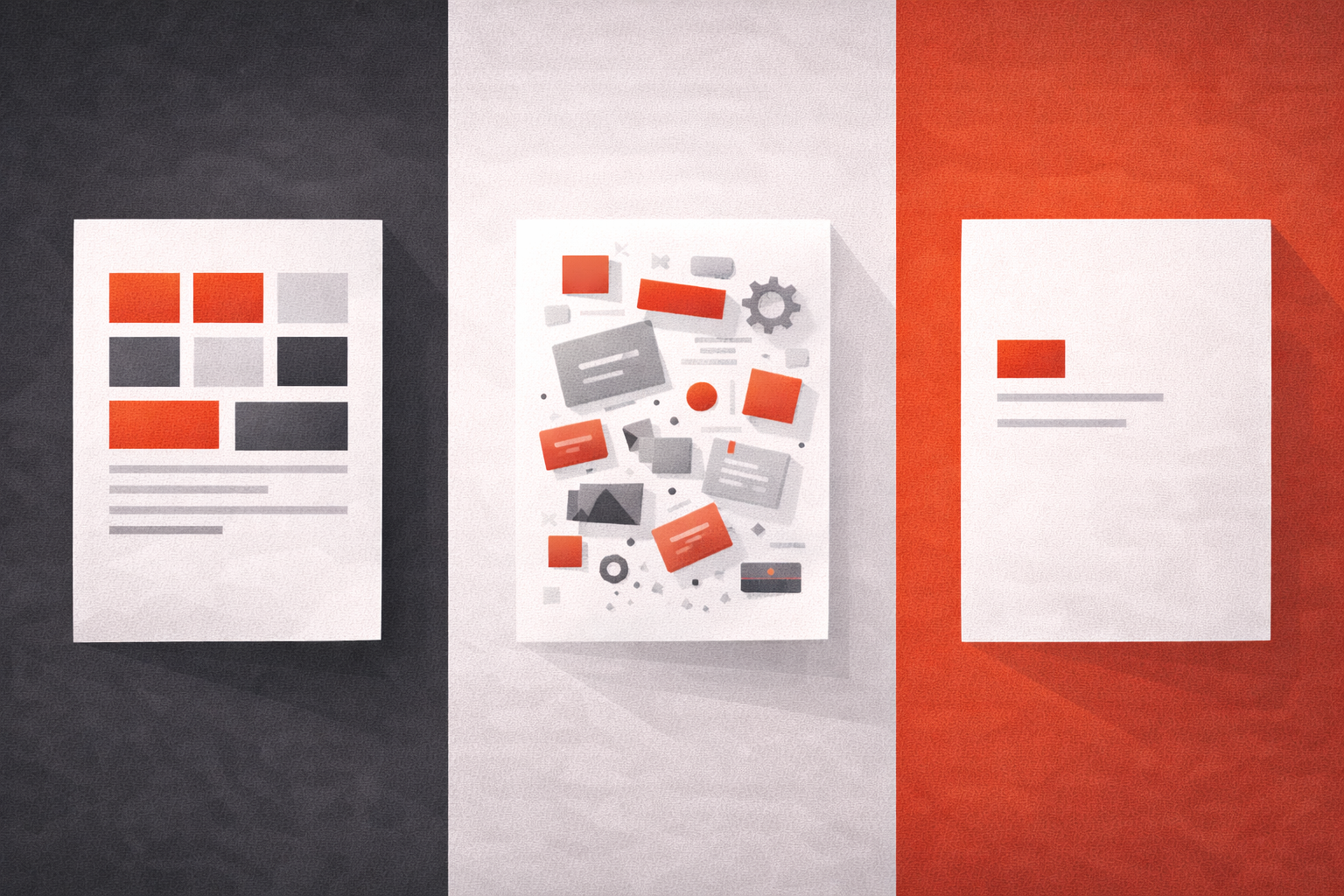
The problem of inconsistency
Imagine three employees writing customer proposals with ChatGPT or Copilot. The first one produces a professional, structured text. The second one generates overly sales-oriented content that doesn't match your company's tone. The third one produces a document that is too technical or too vague.
The result? You can't delegate with confidence. You have to validate everything, all the time. AI speeds up creation, but slows you down at approval.
Concrete examples in SMEs
- Emails: Some are too long, others too aggressive or not professional enough.
- Commercial proposals: The level of detail varies (2 pages vs. 7 pages), the style changes radically.
- Meeting summaries: Structure varies depending on who writes them, key information sometimes missing
Variability kills confidence. Without standards, it is impossible to build a reliable process.
Time waster #2: Excessive validation
When quality is inconsistent, validation becomes mandatory and time-consuming. This is the second major waste of time.
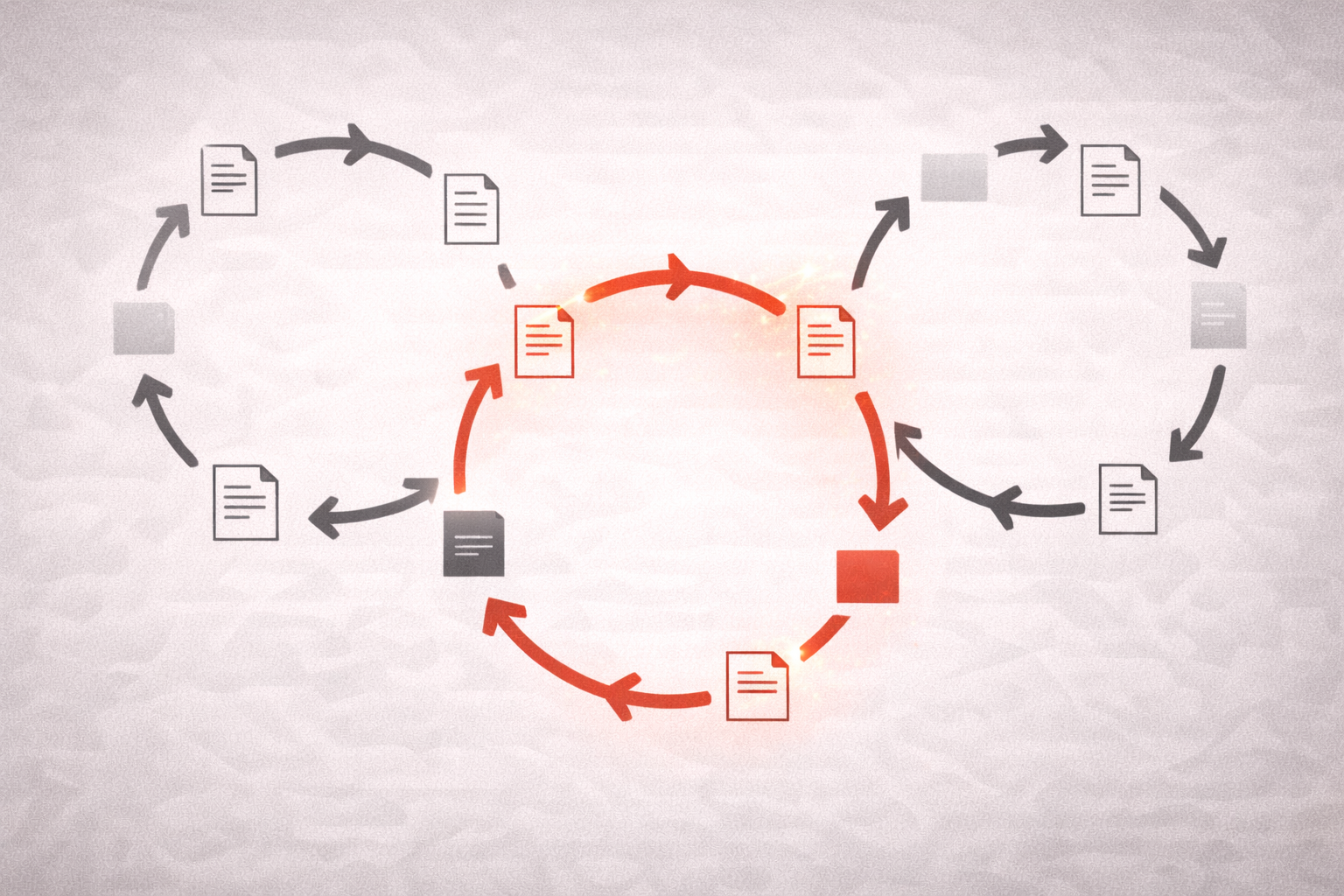
The trap of micromanagement
Since you no longer know what to expect, you check everything, all the time. You reread every email, every proposal, every summary several times. You become the bottleneck of your own team.
Telling question: How much time do you spend reviewing a 2-page AI-generated document? If the answer is 30 minutes or more, your process has a problem.
What to check (and why)
Without clear guidelines, you don't know exactly what to check. So you check everything:
- Does the tone reflect the company's image?
- Are the commitments made realistic?
- Is the information accurate?
- Is the structure consistent with our standards?
- Is the level of professionalism adequate?
This excessive validation negates the initial time savings. AI produces quickly, but you pay the price in proofreading.
Time waster #3: Constant rework
The third time waster is the most frustrating: manual rework. After validation, you realize that major changes are needed.
When the draft becomes a burden
The starting point seemed good. But in the end, you spend as much time correcting as you do creating from scratch. You must:
- Rewrite the tone throughout the document
- Restructure the sections
- Adjust the level of detail
- Realign with customer or management expectations
If you have to change the structure at the end of the process, it means that the starting point was not well defined.
The hidden cost of rework
Rework has an invisible but real cost:
- Time: The initial gain is lost
- Energy: The team is discouraged
- Opportunities: While you are correcting, you are not creating new value.
The impact on your business
These three time wasters aren't just irritants. They have real impacts on your business:
Customer inconsistency: Your communications lack consistent professionalism, which damages your image.
Risks on commitments: Poorly drafted proposals may commit you to unrealistic promises.
Loss of revenue: The time wasted on validation and correction could be used to develop business.
Demobilization: The team loses confidence in AI and reverts to old methods

How to know if you need a switchboard
Here are two rapid diagnostic tests:
Test #1: Team variability
Ask three people on your team to perform the same task using their AI tool (for example: write a proposal for a typical client).
If you have three different styles, three different structures, and three different levels of quality, you need to standardize.
Test #2: Revision cycles
Take your last major deliverable. Count how many rounds of editing it required after the AI draft.
If the answer is 3 cycles or more, you lose all the gains from the initial creation. AI doesn't really help you.
The solution: Standardization
The problem is not changing AI tools or investing in a more advanced model. The solution is to create a clear framework for use:
- Standardized prompts: Tested and approved prompt templates for each type of task
- Validation criteria: Clear checklist of what needs to be verified
- Guidelines: Restrictions on tone, length, and style
- AI Playbook: Documentation of the team's best practices
With a standard in place, you reduce variability, speed up validation, and eliminate rework. AI finally becomes the productivity tool it promises to be.
Conclusion
Poorly managed AI creates three major time wasters:
- Variability in quality that prevents delegation
- Excessive validation that creates bottlenecks
- Constant rework that cancels out initial gains
These problems have real consequences: customer inconsistency, business risks, loss of revenue, and team demotivation.
The good news? It doesn't have to be this way. By standardizing the use of AI with consistent prompts and clear processes, you can turn the tool into a real productivity booster.
Need help standardizing AI in your SME? Sign up for my newsletter to receive practical strategies every week: stevejohnston.co
Frequently Asked Questions
Q1: How long does it take to implement an AI standard in an SME?
A: It takes about 2 to 4 weeks to create the first prompt templates and test them with the team. Continuous improvement is then carried out iteratively.
Q2: Doesn't standardizing AI stifle the team's creativity?
A: On the contrary. A good standard frees up mental time by eliminating repetitive decisions, allowing the team to focus on real added value and innovation.
Q3: Should the whole team use the same AI tool?
A: Not necessarily. The important thing is to standardize prompts and processes, not necessarily the tool. However, using the same tool facilitates collaboration and the sharing of best practices.
Q4: How can we measure whether standardization is really working?
A: Three key indicators: (1) number of revision cycles per document, (2) validation time by the manager, (3) team satisfaction level with AI tools.
Q5: What should you do if some team members resist standardization?
A: Involve them in creating the standards. Show concrete examples of time saved. Start with a simple task and demonstrate the results before expanding.
Q6: Does an AI playbook have to be long and complex?
A: No. Start simple: 3 to 5 standardized prompts for your most frequent tasks, with examples of good and bad results. You can refine it later.
