
ERP in SMEs: it centralizes data, but does not organize work
If you work for an SME, you have probably heard promises such as: "We are going to implement an ERP system, and everything will be structured."
Yes, an ERP can make a big difference. But not necessarily where many people expect it to.
An ERP excels at centralizing information. It imposes fields. It categorizes. It structures data. It makes the system consistent.
But organizing work is something else entirely. Organizing means deciding, coordinating, and executing together, on a daily basis.
In this article, we clarify the distinction and look at what needs to be put in place around ERP to make it work effectively in practice.
Centralizing data: what ERP does (very) well
Centralizing means:
- store information
- consolidate data
- structure the data
- impose a logic (fields, categories, rules)
When an ERP system is well implemented, we often see:
- clean tables
- reports that come out well
- a coherent structure

Organizing work: what ERP doesn't do
Organizing means:
- decide
- coordinate
- execute together
And that doesn't happen automatically.
Even with an ERP system in place, employees' daily work can remain completely different:
- data preparation varies
- the seizure varies
- interpretation varies
- the pace and speed vary
Result: the system centralizes reality... but does not create it.
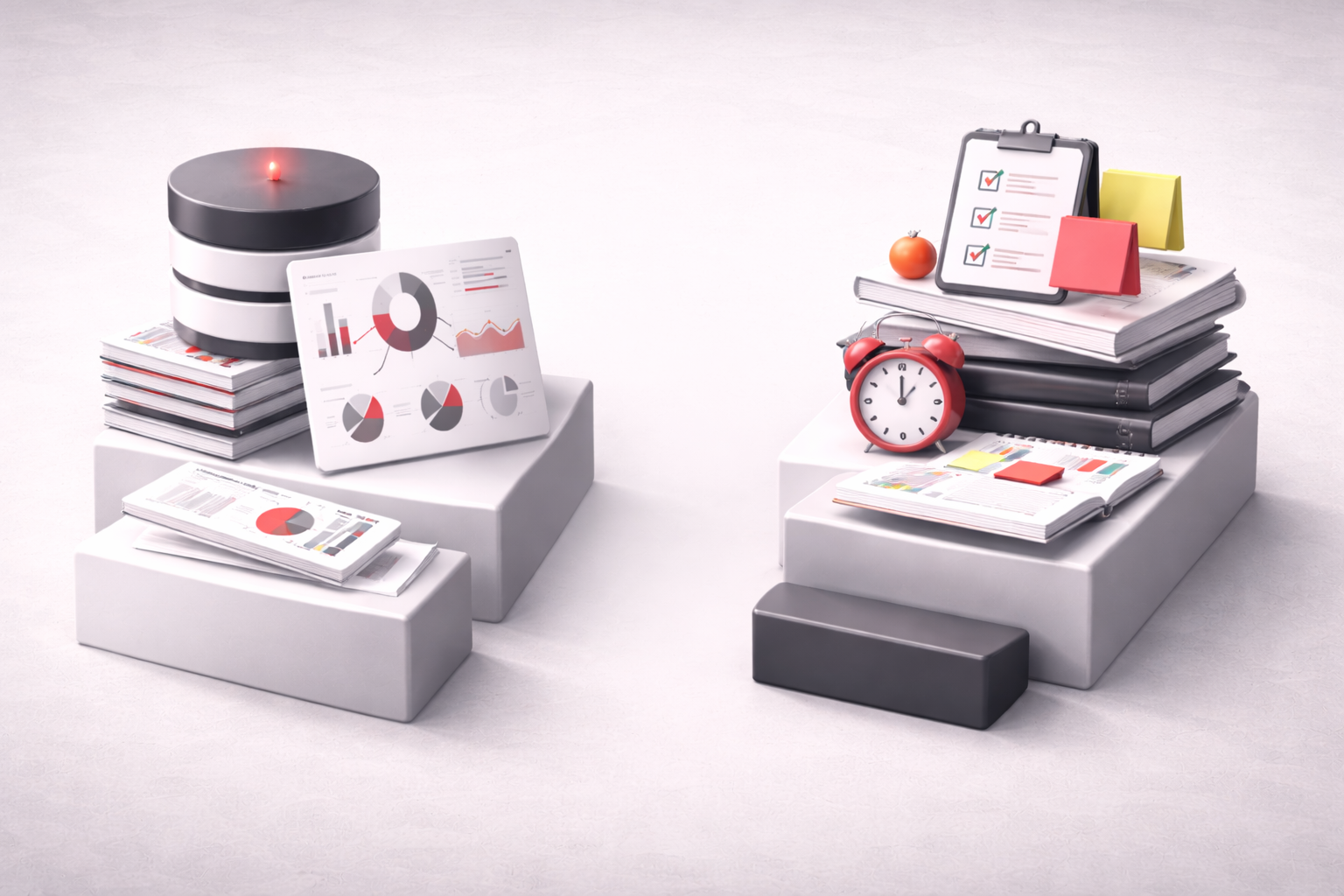
The real problem: the gap between data and execution
What you need to remember is that there is often a gap between:
- centralization (data)
- work organization (execution)
And this gap is exactly where SMEs lose time:
- the information is "in the right place"
- but no one knows clearly who does what, when, and how
Mini checklist for diagnosing the gap
- Does everyone work the same way?
- Is there a common way to plan the week?
- Are priorities visible and shared?
- Is collaboration done "in parallel" (outside of ERP)?
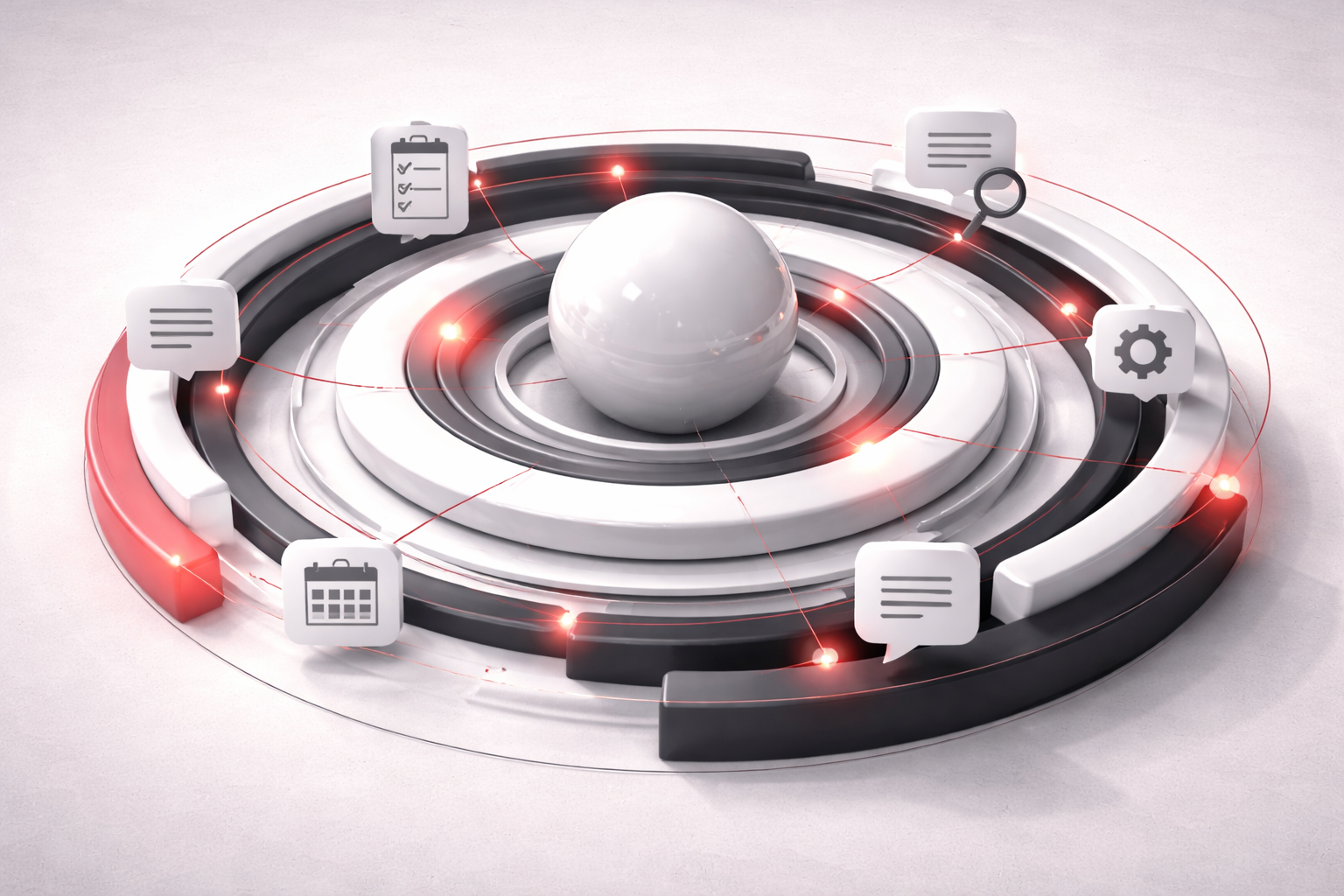
The solution: add an organizational layer on the periphery of the ERP system.
If the ERP system centralizes data, tools and routines are often needed at the periphery to organize it.
What this layer should enable:
- plan work (tasks, deadlines, priorities)
- coordinate between teams
- clarify responsibilities
- standardize procedures
3 simple elements to implement
1) Lightweight standards
- a clear definition of "ready to seize"
- simple required fields
- a quality control routine
2) Team rituals
- weekly review of priorities
- short daily review (if relevant)
- monthly retro to improve
3) Common work management tool
- One place where the team sees: priorities, tasks, dependencies
- Clear rules: what goes into the ERP, and what stays in the work tool
Key points to remember (simply)
An ERP system is excellent for structuring information.
But if you want to structure the execution, you must also structure:
- the way of working
- collaboration
- coordination
In other words: an ERP is an extraordinary hammer... but it is not a foundation.

Conclusion
If your ERP is "clean" but everyday life remains chaotic, this is not uncommon. It is often a sign that the organizational layer is missing: standards, routines, and common tools.
Frequently Asked Questions
Can an ERP system organize the work of an SME?
Not directly. An ERP system centralizes data. Organizing work requires routines, standards, and often a peripheral coordination tool.
Why does the team still work differently even with an ERP system?
Because ERP imposes a data structure, but does not automatically standardize preparation, collaboration, and daily decisions.
What is the main sign that a layer of organization is missing?
When relationships are good, but priorities, responsibilities, and follow-ups are unclear on a daily basis.
Should the ERP system be replaced?
Not necessarily. Often, ERP needs to be supplemented with a layer of work management (tools + rituals).
