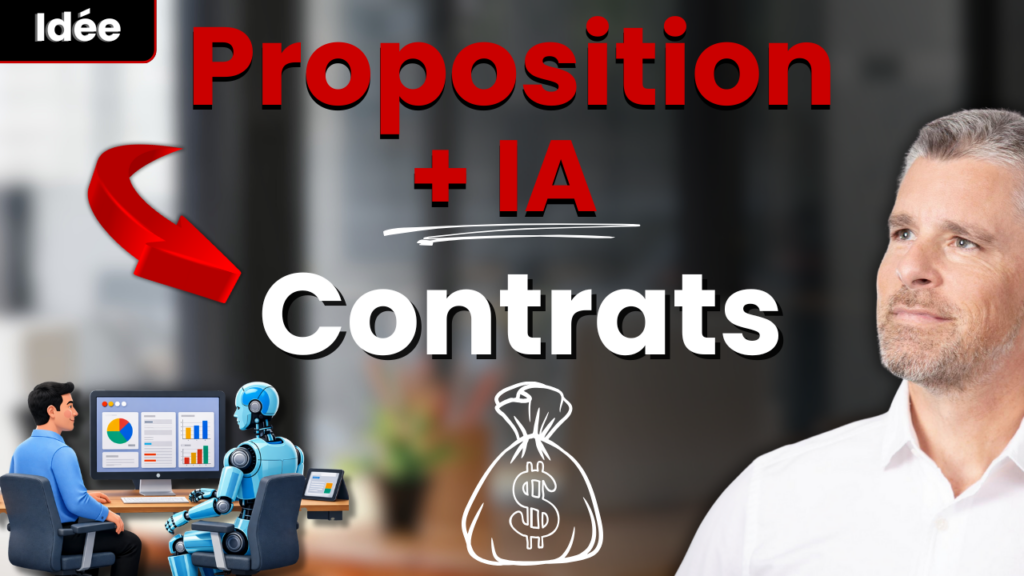
Write customer proposals faster with AI and dictation
Writing a serious client proposal can easily take up an entire evening. You open Word, start from an old template, edit everything... and end up exhausted. However, with a microphone, a good structure, and smart use of AI, you can turn this marathon into a much lighter process, while still maintaining complete control over the result.
In this article, we'll look at how to use dictation and AI to build your proposal block by block, check consistency between sections, and deliver a clean document ready to send to your client.
1. Start with the structure, not the sentences
The first classic mistake is to jump straight into writing paragraphs. The result: you lose focus, as does the AI, and you end up with a long but poorly organized text.
The idea here is to start by structuring your document. Before even talking about writing, you dictate the table of contents of your proposal to the AI:
- Introduction and background
- Current positioning of your company
- Why the mandate exists (the client's challenges)
- Expected results
- Proposed approach
- Steps and deliverables
- Investment and conditions
- Conclusion

Mini-checklist: properly briefing the AI on the structure
- Keep in mind the type of client and the type of mandate
- List the sections in the logical order in which you want them to appear.
- Specify that this structure must remain stable for the rest of the conversation.
- Ask the AI to repeat the table of contents before continuing.
2. Write block by block instead of one long text
Another common mistake is to ask directly, "Write me the complete proposal." At the time, it seems magical, but in practice, you end up with a text that is too general, with uneven sections and lots of small problems to correct.
The proposed method is based on a simple principle: we work block by block.
You choose a section, for example "Introduction and context," then you brief it orally: who is the client, in which sector, what is the main problem, why are they consulting you now? You let the AI generate a first draft, then you respond.

How to improve each section with AI
- Adjust the tone: more concrete, simpler, more suited to your SME client
- Add or remove details depending on what you really want to say.
- Ask the AI to check whether this section is consistent with what comes before it.
- Make sure the length is reasonable (not a 3-page block for a simple introduction).
Mini checklist: securing each block
- Read the section and check if it really applies to you.
- Ask the AI: "Is this consistent with the previous section?"
- Specify: "Do not repeat sentences already used above."
- Copy and paste the approved section into a master document (Word, OneNote, Notion).
3. Avoid inconsistencies and repetitions between sections
As you create blocks, another risk emerges: inconsistencies. An amount that changes from one section to another, a promise worded differently, sentences that are repeated almost word for word.
This is where AI becomes a very useful verification tool. Once you have gathered several sections in a single document, you can paste them into the tool and explicitly ask it to:

- To list the inconsistencies she sees between sections
- To point out unnecessary repetitions of phrases or ideas
- To check whether the sequence of ideas still makes sense
You can then decide, one by one, which suggestions you accept. The important thing is to stay in control of what changes.
4. Perform a final review before sending to the client.
When all the blocks are assembled in Word or another tool, you finally end up with a complete proposal. Now is the time to do a final review with AI, but also with your own judgment.

What AI can do in final review
- Detect typos and grammar errors
- Standardize certain key terms
- Ensure that titles and subtitles follow a clear logic.
- Propose a slightly more fluid wording without changing the substance
What you keep as your responsibility
- Verify that the figures, amounts, and schedules are accurate.
- Make sure that the way you speak to the customer matches your actual relationship.
- Confirm that the commitment you are proposing is realistic for your team.
Conclusion
- Starting with a clear structure before writing simplifies everything, both for you and for the AI.
- Working block by block allows you to maintain control over each section of your proposal.
- Copying and pasting each approved section into a master document prevents good text from being lost.
- Using AI in inconsistency checker mode helps to secure amounts, promises, and sequence.
- Ultimately, you save time, reduce fatigue, and can focus on your relationship with your customer.
CTA: Subscribe to the newsletter for other AI methods tailored to SMEs, and contact me if you want to implement this type of process in your company.
