Imagine artificial intelligence that doesn't just answer your questions, but acts on your behalf, takes initiative, and solves complex problems without constant intervention on your part. That's exactly what AI agents offer, a significant evolution from traditional language models like ChatGPT. For Quebec SMEs looking to optimize their operations, this distinction represents a considerable opportunity for automation and efficiency.
What is an AI agent and how does it differ from traditional LLMs?
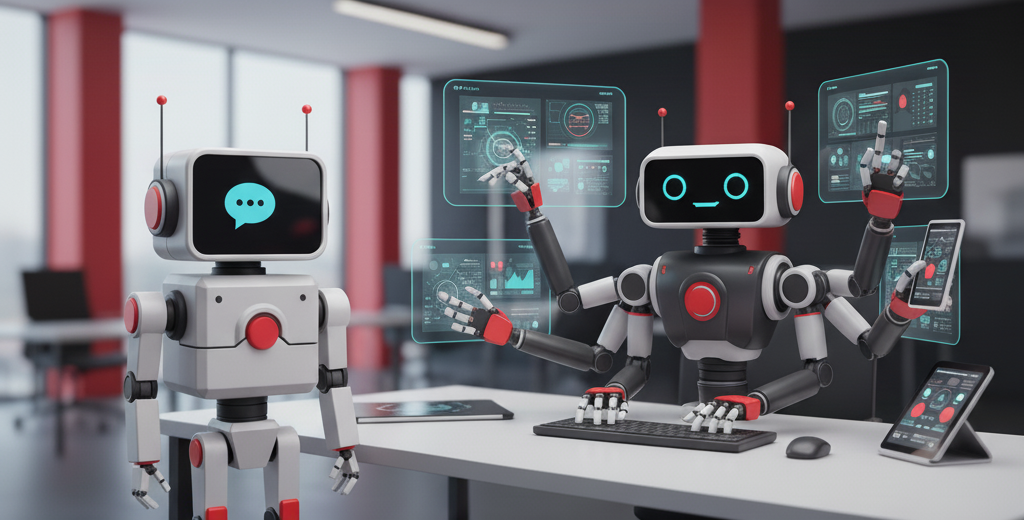
AI agents represent a major evolution in the field of artificial intelligence. Unlike large language models (LLMs) such as ChatGPT, Claude, or Gemini, which passively wait for your instructions, AI agents are designed to:
- Act independently in your absence
- Take initiatives based on predefined objectives
- Solve complex problems without constant human intervention
- Interact with other digital systems and tools
- Learning and improving over time
This distinction is fundamental. While an LLM such as ChatGPT excels at generating content and answering questions, it remains fundamentally reactive. An AI agent, on the other hand, is proactive and focused on achieving specific goals.
The technical heart of AI agents
It is important to note that AI agents often use LLMs such as ChatGPT in their operations. The difference lies in their more complex architecture, which allows them to be connected to other tools and systems to perform concrete actions. Prompting (or the art of formulating instructions) remains crucial, but is now integrated into a broader and more autonomous framework of actions.
How can SMEs benefit from AI agents right now?
Contrary to what one might think, AI agents are not reserved for large companies with significant technological resources. Here's how Quebec SMEs can start integrating them:
1. Identify repetitive processes
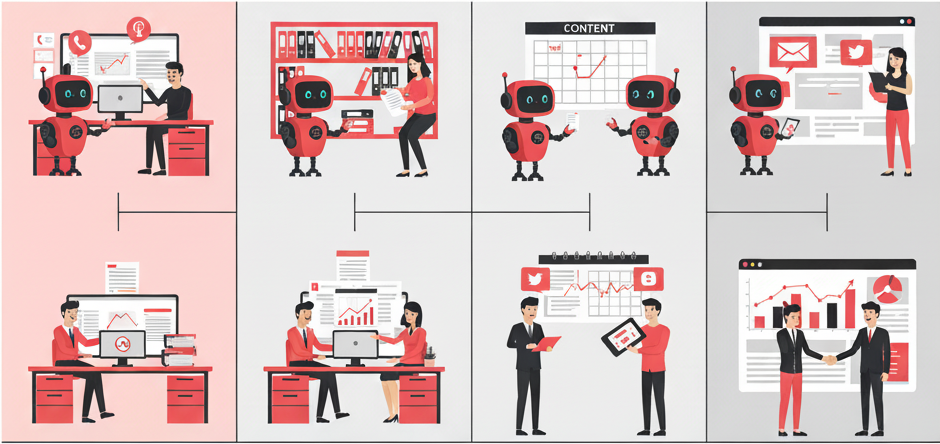
The first step is to identify recurring, time-consuming tasks that could be automated:
- Customer service: answers to frequently asked questions
- Administrative management: document filing, invoice tracking
- Marketing: content planning and publishing
- Sales: initial qualification of prospects
2. Develop effective prompts
Your experience with traditional LLMs is not lost! The prompts you currently use can be adapted and transposed for AI agents:
- Document your best current prompts
- Organize them into action plans.
- Test them and gradually refine them.
This approach will allow you to capitalize on your experience while paving the way for the adoption of AI agents.
3. Start small with a pilot project
Choose a simple but high-impact process for your first AI agent project:
- A bot to answer frequently asked questions from customers
- An assistant for preparing periodic reports
- An automatic email sorting and filing system
The goal is to achieve quick results while developing your understanding of the technology.
Concrete examples of the use of AI agents in SMEs
Automated customer service
An SME specializing in online sales can deploy an AI agent that:
- Answers questions about products and orders 24/7
- Processes return requests by automatically verifying eligibility
- Generates tickets for complex issues requiring human intervention
- Proactively tracks packages and informs customers of potential delays
This automation not only improves customer satisfaction, but also frees up employees for higher value-added tasks.
Smart administrative management
For a small service business, an AI agent can:
- Process incoming invoices by categorizing them and preparing payments.
- Generate standardized quotes based on predefined parameters
- Monitor contracts and alert on important deadlines
- Prepare periodic reports on financial performance
The future of AI agents for Quebec SMEs
The adoption of AI agents by SMEs is not a question of "if" but "when." Organizations that start exploring these technologies early will gain a significant competitive advantage. Here's why:

- Reduced operating costs through intelligent automation
- Improved responsiveness and service quality
- Ability to manage growth without a proportional increase in staff numbers
- Unlocking the creative and strategic potential of human teams
The most promising aspect lies in the collaboration between humans and AI agents. It is not a question of replacement, but of augmenting human capabilities through technology.
How can you get started today?
To integrate AI agents into your business strategy:
- Evaluate your current processes to identify opportunities for automation.
- Document and save your existing prompts for language models
- Explore platforms that offer AI agent solutions accessible to SMEs
- Train yourself and your teams to collaborate effectively with these new technologies.
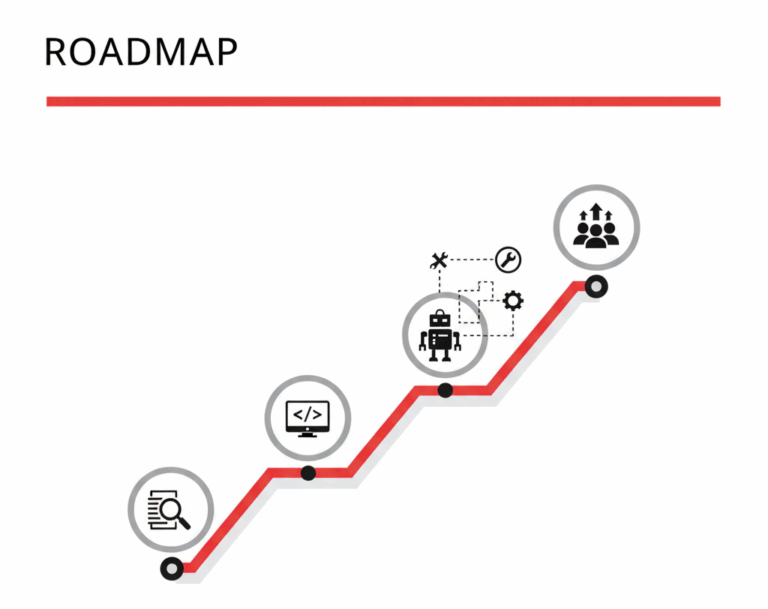
The key is to start small, learn quickly, and gradually expand the use of AI agents within your organization.
Conclusion: Preparing your SME for the era of AI agents
AI agents represent an unprecedented opportunity for Quebec SMEs looking to optimize their operations and remain competitive. By starting to explore this technology now, you can not only improve your current efficiency, but also position yourself favorably for future developments.
Would you like to explore how AI agents could transform your business? Contact me for a personalized consultation that will help you identify opportunities specific to your industry and develop a roadmap tailored to your needs.

FAQ: AI agents for SMEs
What is the main difference between an AI agent and ChatGPT?
An AI agent is proactive and can act autonomously to achieve objectives, while ChatGPT is reactive and only responds to specific instructions it receives. AI agents can also interact with other digital systems and tools to perform concrete tasks.
Is my SME too small to benefit from AI agents?
No, even very small businesses can benefit from AI agents. The scale of adoption may vary, but automating repetitive tasks such as basic customer service or email processing can generate significant benefits regardless of the size of the business.
What are the costs associated with implementing AI agents?
Costs vary considerably depending on the complexity of the solutions. Affordable options exist for SMEs, with platforms offering usage-based pricing. The initial investment can be modest if you start with a targeted pilot project.
Will AI agents replace my employees?
The goal of AI agents is not to replace employees but to free them from repetitive tasks so they can focus on higher value-added activities. It is about augmenting human capabilities rather than replacing them.
Where should I start if I want to integrate AI agents into my business?
Start by identifying a simple but time-consuming process in your organization, such as responding to frequently asked customer questions. Document this process in detail, then explore AI agent platforms that could automate it. A well-defined pilot project is the best way to get started.
