
ERP as a single source of truth for small and medium-sized businesses: less data re-entry, faster decision-making
When an SME says, “Our reports aren’t reliable,” the instinct is often to blame the dashboard, the Excel spreadsheet, or the person who “crunched the numbers.” In reality, the problem almost always lies further upstream.
A useful ERP system isn’t just a place where information is entered after the fact. It’s an accurate reflection of the work being done, designed to follow the teams’ actual workflow. When that’s the case, data is entered only once—at the right time and in the right place. And everything else becomes simpler.
The real sign: validation comes through hard work
In a well-aligned organization, there’s no need for a series of translations, corrections, and “validations” after each step. Validation is built into the workflow: the moment an action is taken, it becomes accurate and actionable.
In practical terms, this means:
- less re-entry
- fewer exceptions
- fewer cascading validations
- clearer reports, faster
- faster decisions
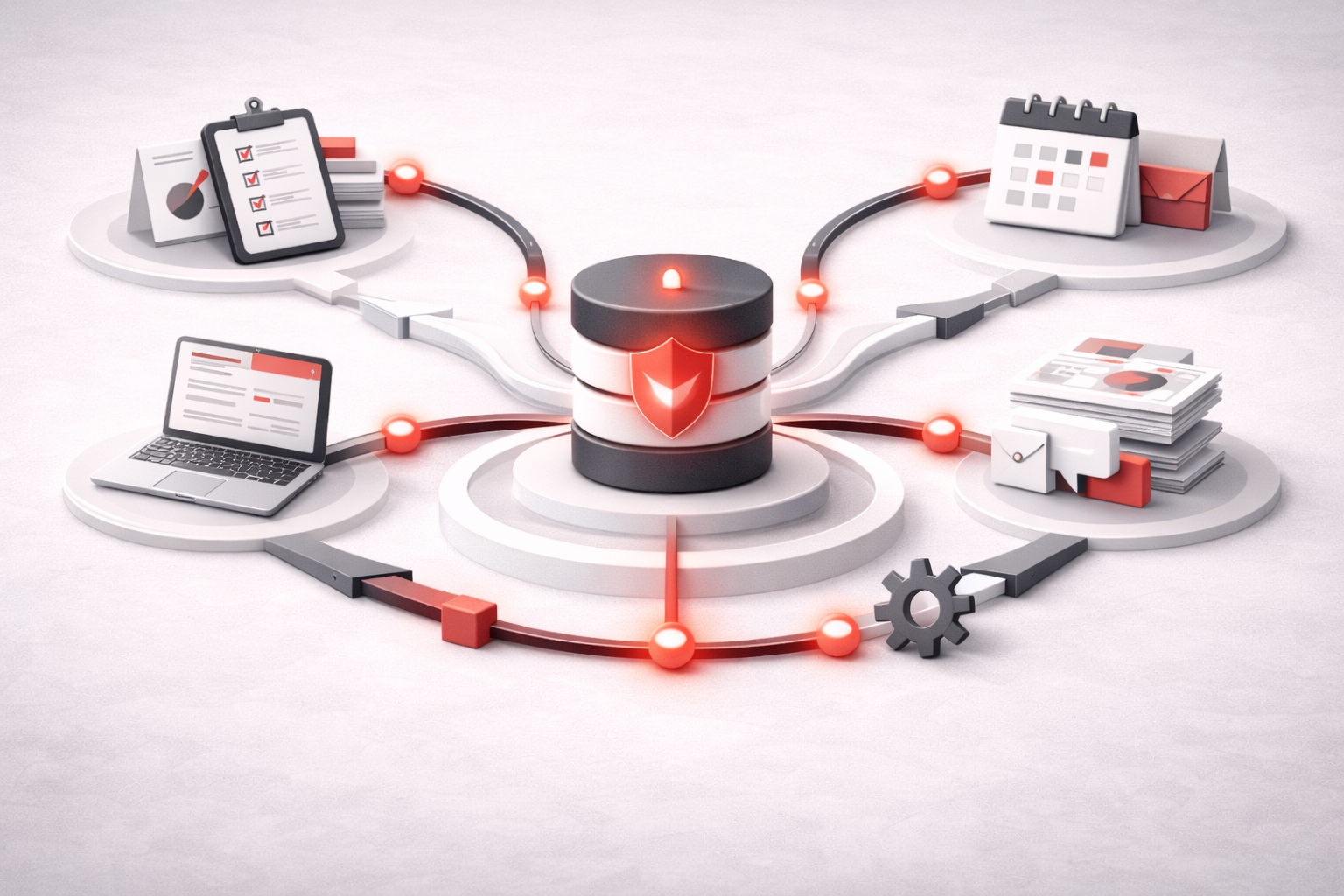
Mini-checklist: How to Identify Cascading Validation
- The same information is re-entered in two or more tools
- You need to "reconcile" the versions before taking action
- The teams are just waiting for approval to “update the system”
- The reports arrive too late to be useful
Rules vs. Exceptions: Data Quality That Evolves Over Time
The idea isn’t to eliminate all exceptions. It’s to ensure that the rule takes precedence. When work is structured around simple rules, the data is cleaner both at the source and at the destination.
That’s also what makes “just-in-time” possible: instead of waiting until the end of the week or the end of the month to clean the data, it’s cleaned as it comes in.
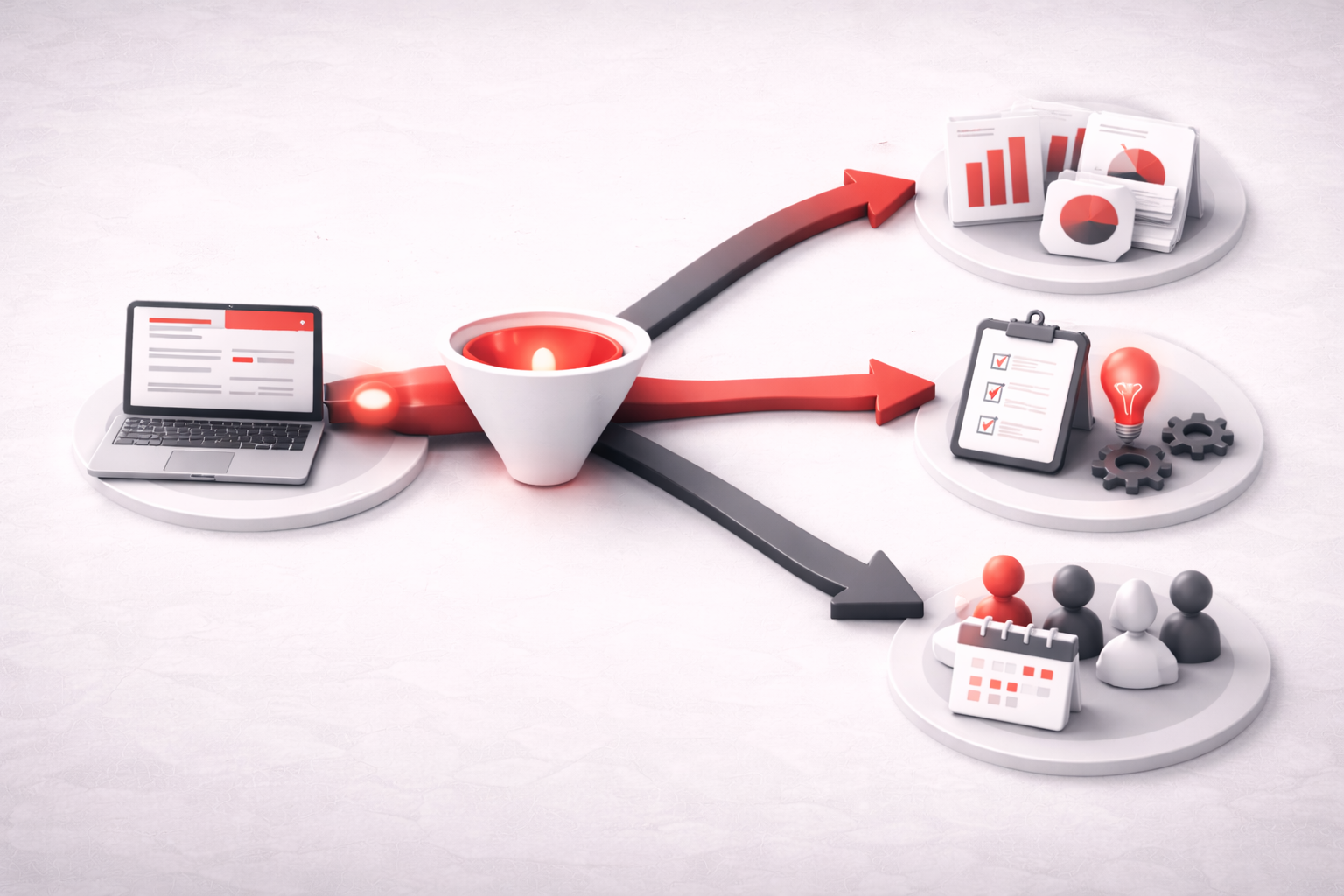
Example: Small Business (Field)
Imagine a team that has to track orders, deliveries, and billing.
- If the information is entered into the ERP system as the work is being done, the teams all see the same picture.
- If the information is entered later, or by someone else, we end up back with translation, corrections, and uncertainty.
The hidden cost isn't just time. It's the loss of trust.
Human impacts: mental load, clear roles, trust
When the system aligns with the realities of the workplace:
- the roles are more clearly defined
- Decisions are made more quickly
- mental load decreases
- confidence grows (in one's work, in the results, and in others' data)
And adoption becomes more natural. Teams don’t enter data “just because they have to.” They do it because it’s part of their job, and the system no longer gets in the way of how they work.

A useful analogy
An ERP system can be an amazing tool. But a tool is not a foundation.
If the workflow is unclear, the tool only adds to the confusion. If the workflow is clear, the tool speeds everything up.
Visibility and autonomy: less reliance on internal experts
In the medium term, the strategic impact is significant: greater practical visibility and increased autonomy.
When day-to-day work is properly captured, the organization becomes less reliant on a few internal experts to “make the system work.” Everyone gains greater operational autonomy because the information is available exactly when it’s needed.
The system becomes a coherent control center because it reflects reality rather than reconstructing it after the fact.
Frequently Asked Questions
What is a “single source of truth” in an SME?
This is the place and the approach where information is considered official, consistent, and reusable, without having to reconcile it across multiple tools.
Why do we end up with duplicate entries?
Often because the tools don’t follow the actual workflow. So we “translate” it after the fact, and each translation creates a new version.
Is the problem with the dashboard?
Rarely. If the input data is uncertain, the table cannot be reliable. It merely reflects that uncertainty.
How can we reduce cascading validations?
By integrating validation into the workflow, simplifying the rules, and reducing the number of places where the same information might exist.
ERP or CRM: Which Should Be the Single Source of Truth?
It depends on the process. The key is to avoid having two conflicting “hubs.” You need to decide where the information originates and where it should reside.
