ERP as a source of truth for SMBs: less re-entry, faster decisions
When an SMB says, “Our reports aren’t reliable,” the reflex is often to blame the dashboard, the Excel file, or the person who “pulled the numbers.” In reality, the problem is almost always upstream.
A useful ERP is not a place where you drop information after the fact. It is a faithful mirror of the work, built to follow how your teams actually operate. When that is the case, data gets created once, at the right time, in the right place. And everything else gets simpler.
The real signal: validation happens inside the work
In a well-aligned organization, nobody has to translate, correct and “validate” in a cascade after every step. Validation is built into the flow: the moment an action is done, it becomes true and usable.
In practice, that means:
- less re-entry
- fewer exceptions
- fewer cascading validations
- clearer reports, sooner
- faster decisions
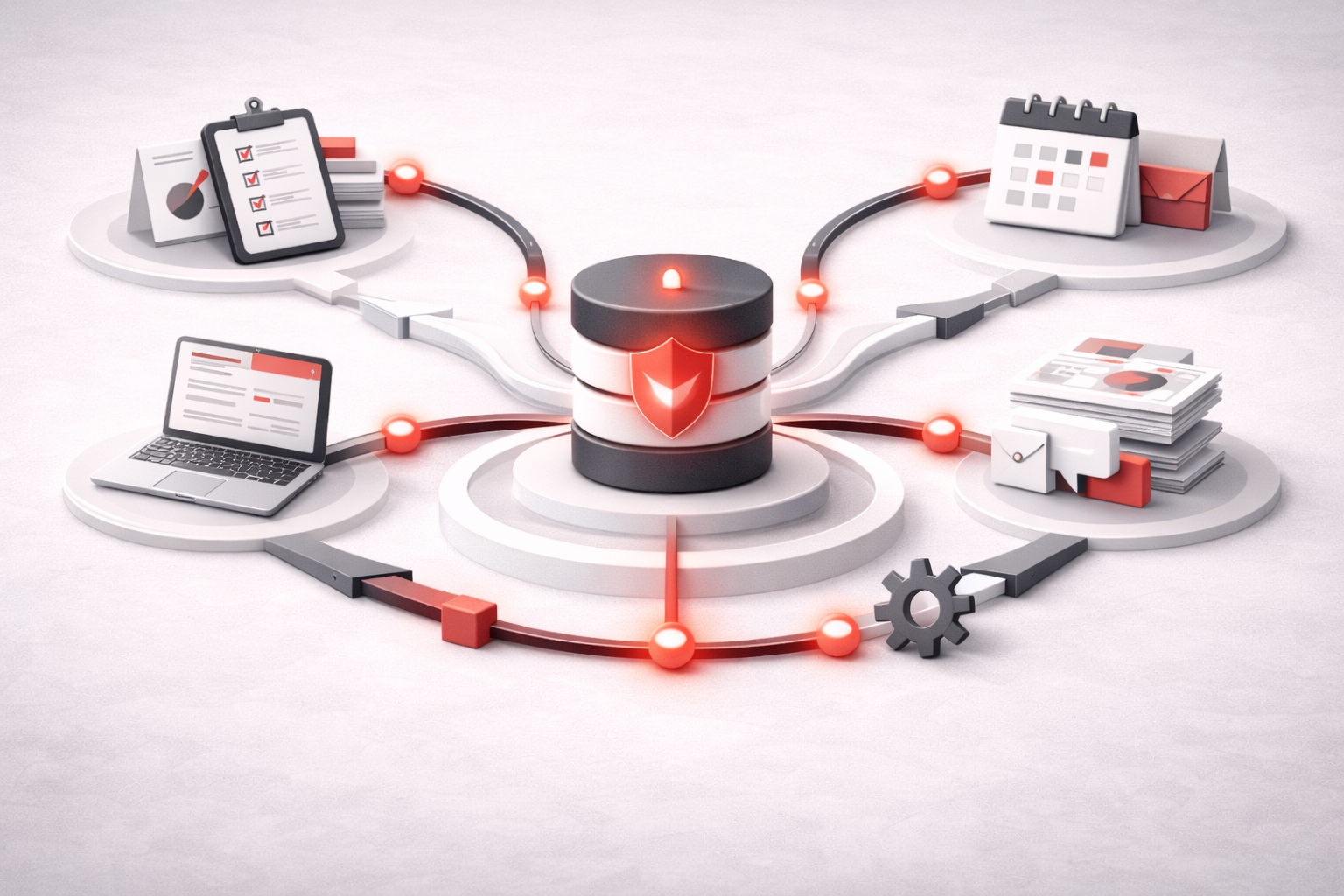
Mini-checklist: how to spot cascading validation
- The same information is re-entered in 2+ tools
- You have to “reconcile” versions before you can act
- Teams wait for approval just to “update the system”
- Reports arrive too late to be useful
Rules vs exceptions: data quality you build as you go
The goal is not to eliminate every exception. It is to make sure the rule dominates. When work is structured around simple rules, data gets cleaner at the source and at the destination.
That is also what makes “just in time” possible: instead of waiting for the end of the week or the end of the month to clean up, the data gets cleaned as you go.
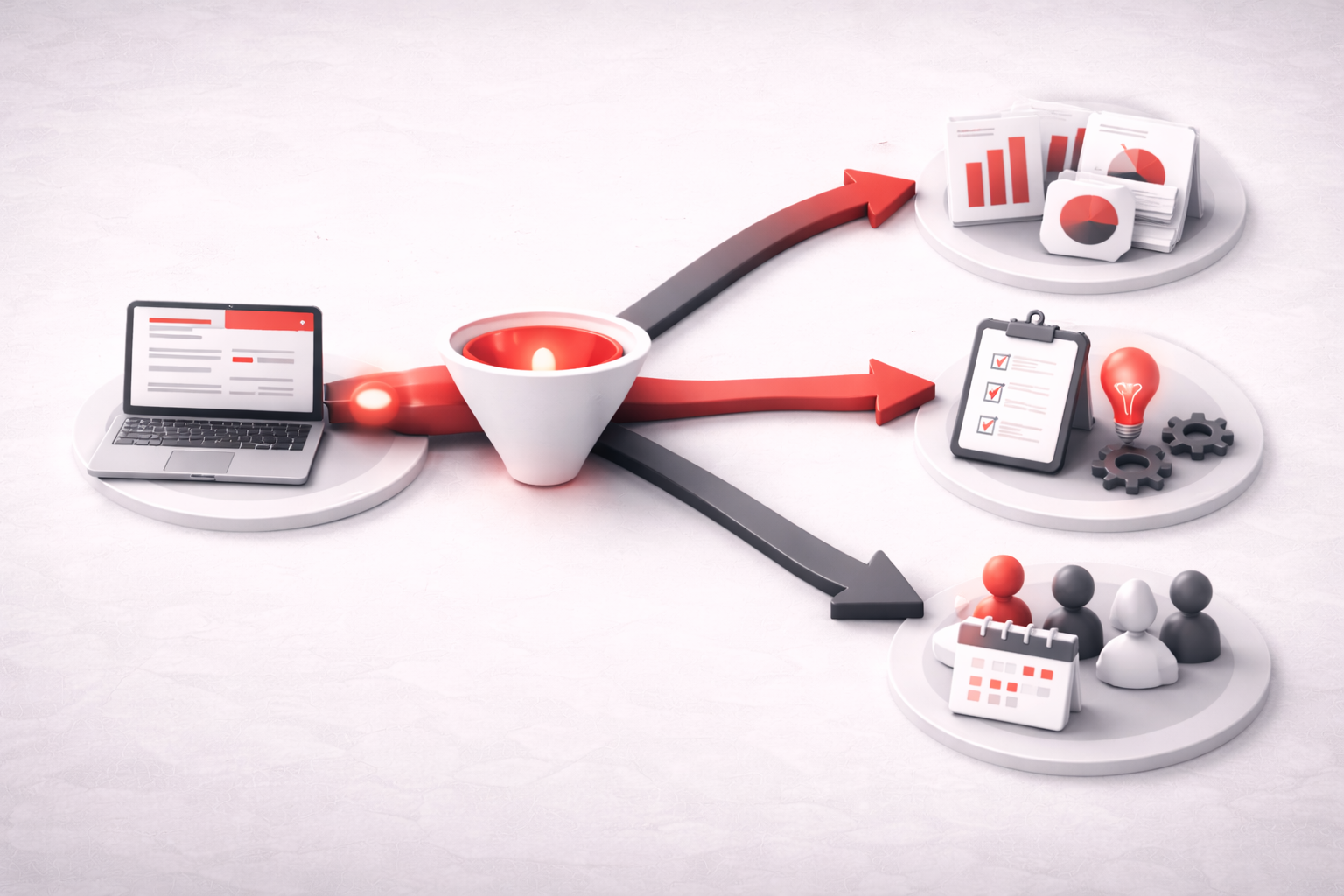
An SMB example (from the field)
Picture a team that has to track orders, deliveries and invoicing.
- If the information goes into the ERP as the work happens, every team sees the same reality.
- If it goes in later, or someone else enters it, you fall back into translating, correcting, and uncertainty.
The hidden cost is not just time. It is trust, slowly lost.
The human impact: mental load, clear roles, trust
When the system is aligned with how the work really happens:
- roles get sharper
- decisions get made faster
- mental load goes down
- trust goes up (in your own work, in the result, and in other people’s data)
And adoption becomes more natural. Teams don’t enter data “because they have to.” They do it because it is part of the work, and the system no longer contradicts the way they work.

The useful analogy
An ERP can be an extraordinary hammer. But a hammer is not a foundation.
If the architecture of the work is fuzzy, the tool amplifies the confusion. If the architecture is clear, the tool speeds everything up.
Visibility and autonomy: less dependence on internal experts
Over the medium term, the strategic impact is major: real visibility and more autonomy.
When day-to-day work is captured properly, the organization depends less on a few internal experts to “make the system talk.” Everyone gains operational autonomy, because the information is there when it is useful.
The system becomes a coherent control centre, because it reflects reality instead of rebuilding it after the fact.
FAQ
What is a “source of truth” in an SMB?
It is the place, and the logic, where information is considered official, consistent and reusable, without having to reconcile it across several tools.
Why do we end up entering the same data twice?
Often because the tools don’t follow the real logic of the work. So people “translate” after the fact, and every translation creates a new version.
Is the dashboard the problem?
Rarely. If the data is uncertain going in, the dashboard cannot be reliable. It only reflects the uncertainty.
How do you reduce cascading validations?
By building validation into the workflow, simplifying the rules, and reducing the number of places where the same information can exist.
ERP or CRM: which one should be the source of truth?
It depends on the process. What matters is avoiding two “centres” that contradict each other. You have to decide where information is born, and where it should live.
ERP series
